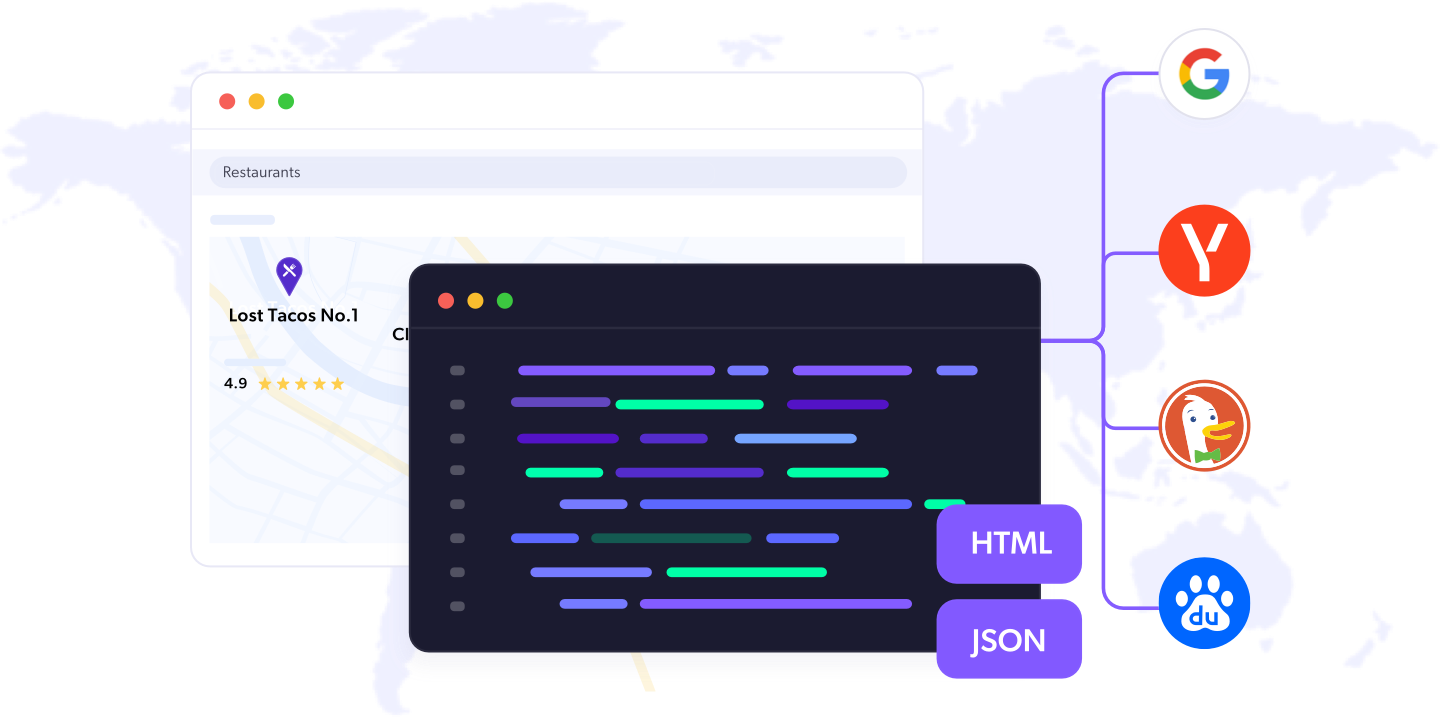
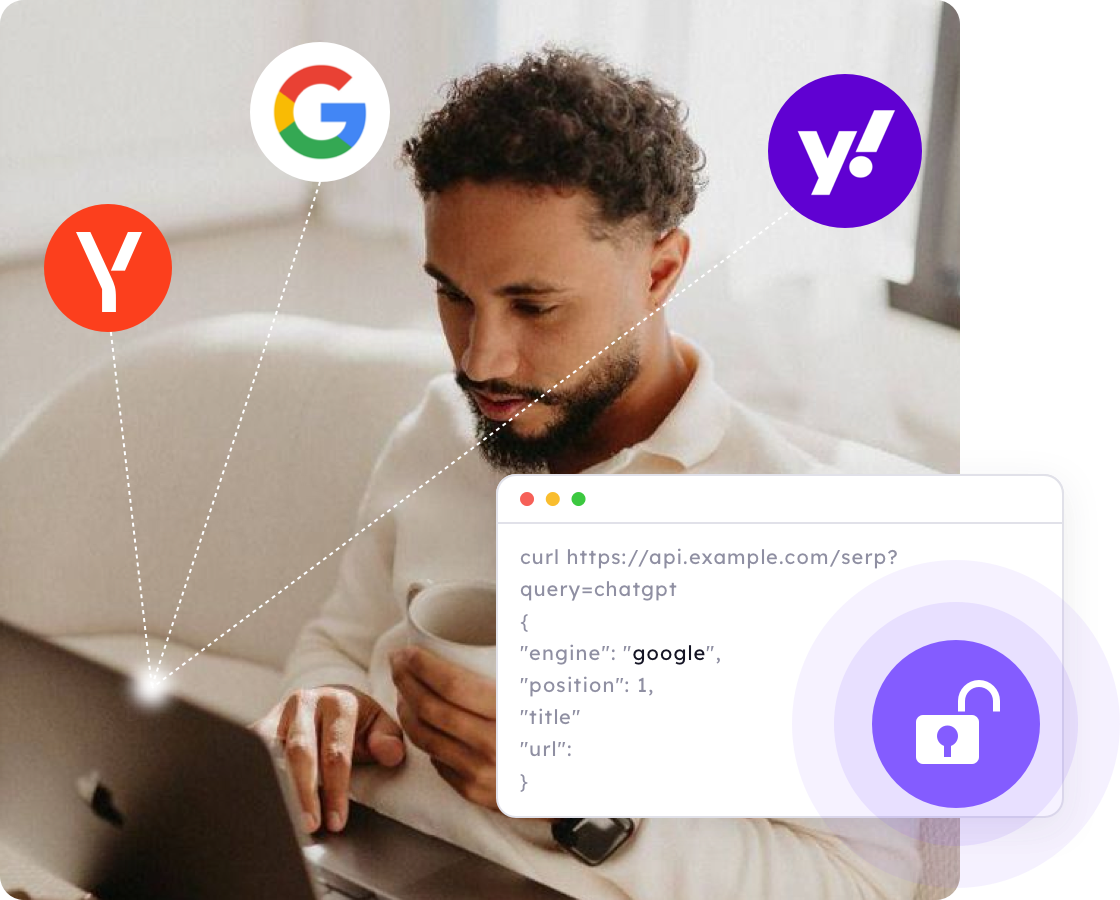
A SERP API is a service built for collecting search engine results page data through a structured interface. Instead of maintaining your own public web data collection workflow, network access resources, and page parsing logic, you can send standardized requests and receive structured search result data.
This type of service is commonly used by teams that need ongoing access to search result data, especially in the following scenarios.
1. SEO ranking monitoring
If you need to track how keywords perform on Google, Bing, Baidu, or other search engines over time, a SERP API is often more stable than manual checks or browser automation. You can collect results by country, city, device, and language, then feed that data into your own reporting workflows to monitor organic rankings, competitor visibility, and search presence over time.
2. Ad and campaign verification
Many advertisers adjust what users see based on region, device context, and search intent. A SERP API can help you collect ad placements, sponsored results, branded query coverage, and regional differences in search result presentation. This makes it useful for ad verification, brand protection, and paid search review workflows.
3. Competitor and market research
Teams in ecommerce, SaaS, travel, and local services often need to understand how competitors appear in search results. With a SERP API, you can regularly collect result page data for competitor terms, category terms, and branded queries, then analyze title patterns, landing page strategies, rich result exposure, and ranking shifts.
4. Localized search analysis
Search results are not the same everywhere. Results can differ by country, city, language, and device type. For teams operating across multiple markets, localized SERP data is important for understanding regional differences, evaluating local SEO performance, and supporting international content or campaign planning.
5. Productizing search result data
If your team is building internal tools, monitoring systems, BI dashboards, or client-facing deliverables, a SERP API can reduce low-level engineering work. Instead of repeatedly rebuilding data collection infrastructure, you can focus more on data cleanup, business rules, and presentation layers.
Conclusion
A SERP API turns search result data collection from an infrastructure problem into an interface workflow. If your business depends on stable, scalable, and structured access to public search result data, it is often a more maintainable option than building the full pipeline yourself.









 High-success search data extraction